

The Moon, Revisited: Why Artemis II Signals a New Lunar Era


In November 1969, humans first walked on the Moon during Apollo 11 Moon Landing. Over the next few years, NASA’s Apollo Program carried astronauts to the lunar surface several more times, culminating in Apollo 17.
Then, something remarkable happened. Humanity stopped going to the Moon.
For over fifty years, the lunar surface remained untouched by human footsteps. The rockets grew bigger, satellites filled Earth’s orbit, robotic explorers ventured across Mars and beyond—but the Moon, our closest celestial neighbor, was left largely to history.
Now that long pause is ending.
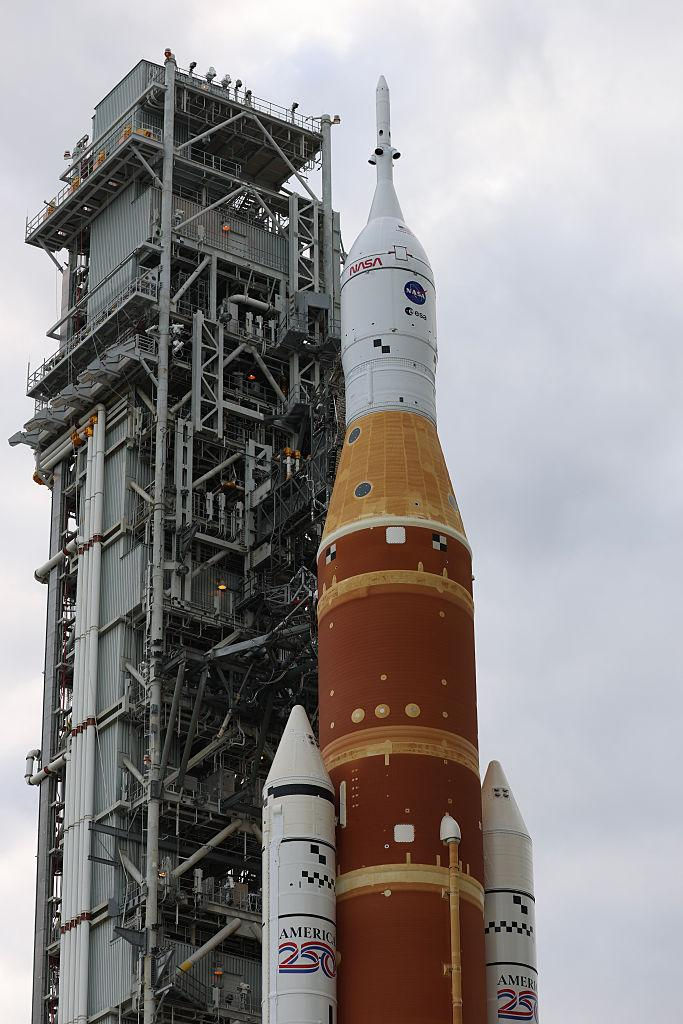
The upcoming Artemis II, part of Artemis Program, will send astronauts on a crewed mission around the Moon for the first time since 1972. While the mission itself is a flyby rather than a landing, its significance lies in what it represents: the beginning of a sustained human return to lunar space.
But to understand why Artemis matters, we first need to understand why lunar exploration stopped in the first place.

The First Moon Race — And Why It Ended
The original Moon missions were born out of geopolitics.
During the Cold War, the United States and the Soviet Union competed fiercely for technological supremacy in what became known as the Space Race. Landing on the Moon was not only a scientific milestone—it was a statement of national capability.
Once that objective was achieved, the motivation faded quickly.
The Apollo missions were enormously expensive, consuming roughly 4% of the entire U.S. federal budget at their peak. Without the urgency of geopolitical competition, sustaining that level of investment became politically difficult. At the same time, NASA’s priorities shifted toward projects like the Space Shuttle Program and later the International Space Station.
In short, the first Moon era was a sprint. Once the finish line was crossed, the race ended.
Why the Moon Matters Again
Today’s return to the Moon is fundamentally different from the Apollo era. Artemis is not about planting flags. It is about building infrastructure.
The Moon has quietly become one of the most strategically important locations in the future of space development. Scientists believe lunar polar regions contain water ice trapped in permanently shadowed craters. Water in space is more valuable than it sounds—it can be converted into oxygen for life support and hydrogen for rocket fuel.
This transforms the Moon into something entirely new: a potential refuelling station for deep space missions.
Instead of launching everything from Earth’s deep gravity well, future spacecraft could stage missions from lunar orbit or from the surface itself. Missions to Mars, asteroid mining operations, and deep-space telescopes suddenly become more practical when fuel, materials, and infrastructure can exist beyond Earth.
There is also the scientific argument. The Moon preserves billions of years of geological history in ways Earth cannot. Without atmospheric erosion, tectonic recycling, or oceans, the lunar surface acts as a time capsule of the early solar system.
Artemis therefore serves three purposes simultaneously: science, infrastructure, and long-term human presence beyond Earth.
A New Kind of Lunar Ecosystem
Another major difference from the Apollo era is that the Moon is no longer a two-country race.
Multiple nations are now building lunar capabilities. China’s Chinese Lunar Exploration Program has already landed rovers and returned lunar samples. India’s Chandrayaan‑3 demonstrated cost-efficient lunar landing capability. Japan, Europe, and several emerging space nations are also preparing lunar missions.
Even more transformative is the role of private industry. Companies like SpaceX, Blue Origin, and Intuitive Machines are now central players in the lunar ecosystem.
During Apollo, governments built everything.
In the Artemis era, governments are becoming anchor customers while private companies design rockets, landers, habitats, and cargo systems. This shift fundamentally changes the economics of lunar exploration.
The Moon is transitioning from a destination to a marketplace.
The Quiet Boom in Secondary Industries
When people imagine lunar exploration, they often picture astronauts and rockets. The reality is that the economic ripple effects will extend far beyond launch pads.
Returning to the Moon is likely to accelerate innovation in areas such as:
Space robotics and autonomous construction Advanced materials for extreme environments Lunar telecommunications networks In-situ resource utilization (ISRU) technologies Space logistics and orbital transport systems
The pattern is familiar from history. Apollo helped catalyze advancements in computing, materials science, telecommunications, and systems engineering that spilled into the broader economy.
Artemis could do the same—except this time the ecosystem is global and commercial from the outset.
Startups, research institutions, and engineering firms across the world are positioning themselves to support the lunar supply chain.
In other words, Artemis is not just a mission. It is the early foundation of a cis-lunar economy.
A Return — But With a Different Purpose
If Apollo proved that humanity could reach the Moon, Artemis aims to prove that we can stay.
Artemis II is the first human step in that direction. The mission will test the spacecraft, navigation systems, and operational framework required for sustained lunar exploration. Subsequent missions will aim to land astronauts, build lunar surface infrastructure, and establish long-term presence.
Half a century ago, the Moon was a geopolitical trophy.
Today it is something far more interesting: a gateway.
A gateway to deeper exploration, new industries, and perhaps the first truly off-world economy humanity has ever built.
The Moon hasn’t changed. But our reasons for going back certainly have.


